The CU Point Counselling Centre offers free coaching for students and staff of Charles University.
Our experienced coaches will guide you through the process of exploring solutions and support you in developing concrete steps toward your chosen goal. We believe that everyone holds the potential for meaningful change – and we’re here to help you discover and make use of that potential.
Coaching is a structured conversation in which the coach asks goal-oriented questions and supports you in finding your own answers. This collaborative process can help you move closer to achieving your preferred future.
Coaches:

Heading a department, acting as study programme guarantee or managing a grant-funded project is a job for which an academic career does little to prepare us. Suddenly, you find yourself leading people with whom you have shared an office for years. You are responsible for the project’s outcomes, for the colleagues working on it, and for the funds entrusted to you. You negotiate with the faculty management, keep track of accreditations and deadlines, whilst trying not to neglect your own research.
I know this role from the inside. For the past seven years, I have been head of the Department of Sociology at the Faculty of Social Sciences, Charles University; I was the programme coordinator for both a Czech degree programme and an international joint degree programme, and I chaired the GA UK panel. I am a social anthropologist and sociologist. I completed my coaching training through programmes accredited by the International Coaching Federation, of which I am a member.
I see coaching as a tool for personal growth. I help individuals and teams make better use of the skills and resources they already possess. I do not tell people how to do things. I ask questions that help clarify goals, see a situation from multiple angles, and find an approach that suits you specifically. We focus on specific tasks as well as how you experience your roles. In doing so, it helps to consider the broader relationships in the workplace and to pay attention to what the body is signalling. I do not judge, give advice or provide therapy.
Three forms of support:
· Individual coaching to all Charles University staff and PhD students, regardless of whether they hold a leadership position. This involves a one-to-one conversation in a fully confidential setting. The focus is on your specific issue, such as leading people, a difficult decision, feeling overwhelmed, career direction, completing a dissertation or publication, or preparing for a challenging interview.
· Group coaching brings together several people in similar roles, such as heads of departments or programme coordinators from different faculties. Although everyone works on their own goals during the sessions, the group provides new perspectives, shared experience and the realisation that you are not alone in this. The same confidentiality rules apply to all participants.
· Team coaching is designed for an entire team with a shared goal, such as a research team or a group working on a time-bound project. The client here is not an individual, but the team as a whole. I do not replace the team leader. Together, we work on issues that the team identifies as its priorities. This might include, for example, the division of roles, communication and decision-making, so that the team achieves its goal whilst functioning effectively.
We can start with a no-obligation introductory meeting, during which we will discuss together which form of collaboration suits you best.
Due to a conflict of interest, I do not work with students or staff at the Faculty of Social Sciences, Charles University.

+ 420 224 491 759
Adress: Celetná 13, Prague 1
My focus:
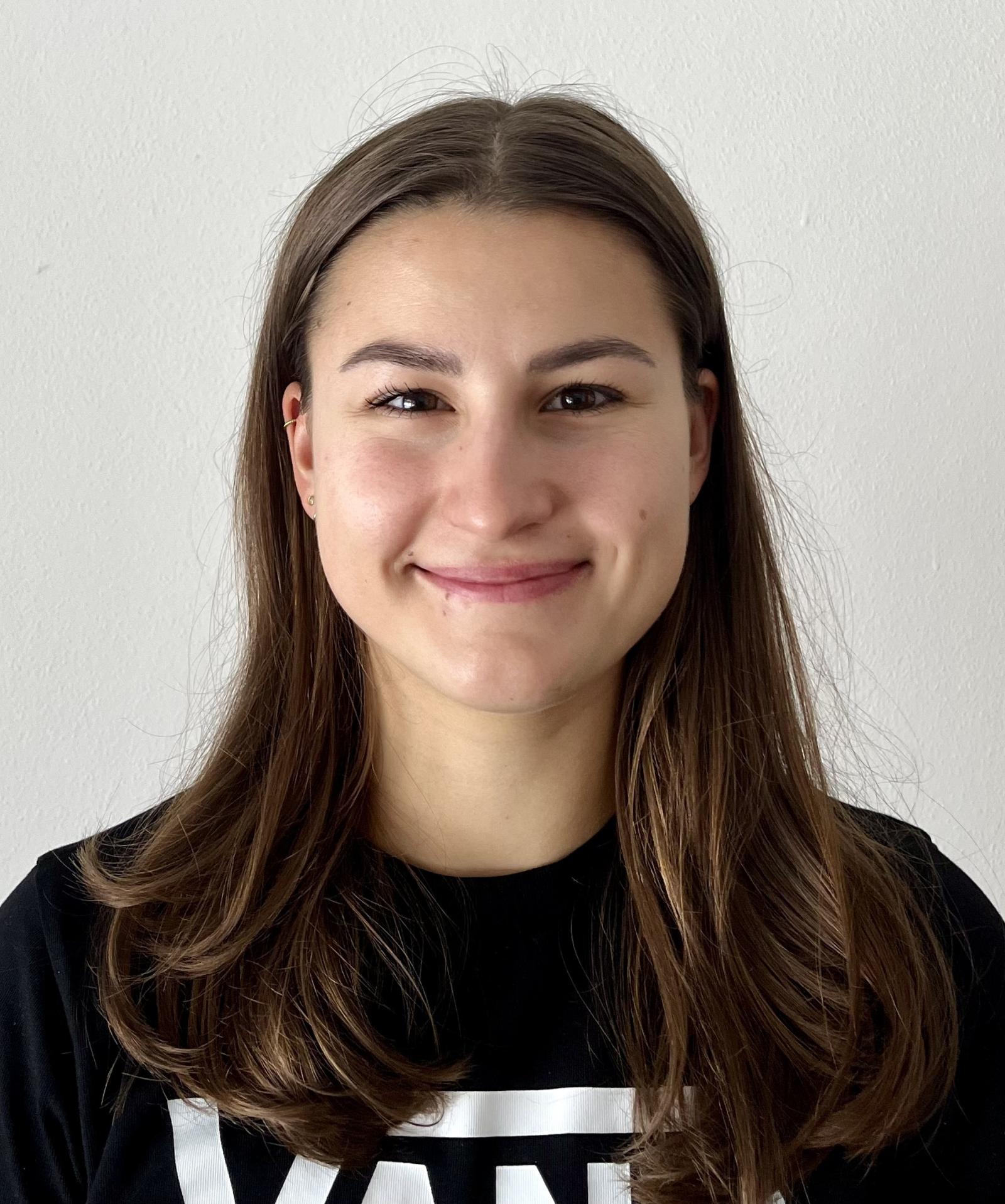
My five-year study of psychology was my first step toward discovering myself and, through that, better understanding the people around me. After completing my studies in Bratislava, I moved to Prague, where I attended courses in crisis intervention, online counseling, and a one-year program in individual coaching at Qued Group. I was so inspired by the potential of coaching that I went on to complete certified non-formal education programs in eco-coaching, social coaching, and self-coaching in various European countries.
What does coaching represent for me?
For me, coaching represents a set of tools that help cultivate mindfulness and sensitivity toward our lives while fostering human potential toward vitality and well-being. In my coaching practice, alongside traditional approaches, I also work with emotions and the body in a safe and supportive environment.
+ 420 224 491 759
Adress: Školská 13a, Praha 1
About me:
I am a psychologist and coach. I studied psychology at Palacký University in Olomouc (Bachelor's degree) and Masaryk University in Brno (Master's degree) and I completed coaching training at Practical Psychology s.r.o. As part of my coaching, I cover a wide range of topics – I am particularly interested in those related to performance demands (at work and in studies), FOMO, self-perception, self-confidence, time management, volunteering, life changes etc.
What I appreciate about coaching?
Its content is created by the client – through their words, topics, and stories. I am not here to give universal advice, but to work with the client to uncover possibilities that arise from their unique world – in other words, "tailor-made." And yes, emotions are also part of coaching – they are our guides and, together with reason, form an important part of the whole process.
Increased self-confidence: Coaching can help you better recognize your strengths and find ways to use them effectively.
Clarity and direction: Together with your coach, you can clarify your goals and outline a path to achieve them.
Improved skills: Coaching can support the development of key skills such as time management, communication, and decision-making.
Better stress management: By exploring your current coping strategies, you can find ways to create more balance between your studies/work and personal life.
Motivation and perseverance: Coaching can boost your motivation and determination when facing challenges and pursuing your goals.
Career development: With your coach, you can identify and work toward your professional goals and opportunities.
Coaching is always confidential, individual, and focused on you and your needs. The process typically involves the following steps:
1. Introductory session: In the first meeting, we’ll get to know your needs and expectations. We’ll talk about what brings you to coaching and agree on the goal you would like to work toward.
2. Goal setting: Together, we will define clear and achievable goals. Coaching is future-oriented and solution-focused, rather than centered on analyzing the past.
3. Co-creation: We’ll identify the steps that will move you closer to your goals. Together, we will explore your strengths and resources that can help you succeed.
4. Support and motivation: During regular sessions, you’ll have space for reflection and feedback. We’ll look for ways you can find support and motivation to keep progressing.
5. Reflecting on change: Throughout the process, we’ll reflect on the changes that occur and adjust our work together based on your needs, possibilities, and current situation.
|
1. Introductory session
|
||
If you’re uncertain about whether coaching is the right fit for you, or if you’d simply like more information, don’t hesitate to get in touch with us. Our team is here to answer your questions and support you in making your decision.
To log in, please use your university login credentials in the format personnumber@cuni.cz and your CAS password to sign in.
Can’t find a suitable time slot or see no available sessions in the system? Don’t hesitate to send us an email — we’ll be happy to find a time that works for you. Write us at: counsel@ruk.cuni.cz
CU Point
Charles University
Celetná 13
116 36 Prague 1
Czech Republic
Phone: +420 224 491 850
E-mail: